Are you thinking about going back to school to pursue your associates, bachelors, masters or doctorate degree? Is it constantly on your mind, every single day? Then I suggest you saddle up and pursue the thing that scares you the most. That is what I did. The thought of obtaining and going further with my education was a relentless thought, I constantly contemplated on what I wanted to be when I “grew up”.

I completed my undergrad at Fort Lewis College in Durango, Colorado. I went back to the reservation and I started working at the Public Health Program; working for my community was the perfect place to be. My supervisor at the time was very passionate about Public Health, she still is, and working with her I was amazed at how everything comes together in public health. If you aren’t familiar, public health is “the art and science of preventing disease, prolonging life and promoting health through organized efforts of society” (Acheson, 1988; WHO). I contemplated for quite some time on choosing a career path, because I aspired to be so many things and I craved challenges. Amidst the whole contemplation phase, I became a mother and I was blessed with a beautiful daughter who I love so dearly. After becoming a mother, I started to make sense of the path I wanted to take.
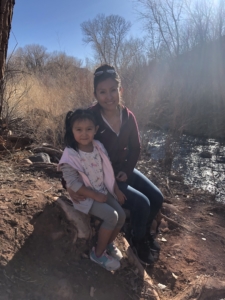
Fast-forward to 2018, I did what I felt was daunting, I submitted my application to graduate school. After hitting the submit button, there were many thoughts in my mind of uncertainty, rejection and self-doubt. A few weeks later I received a letter of acceptance to the University of Arizona Mel and Enid Zuckerman College of Public Health. I had many mixed emotions, it was bittersweet, because the path I was choosing was very foreign to me and, I had my then two-year-old daughter to consider and care for, but I dived into the unknown head first.

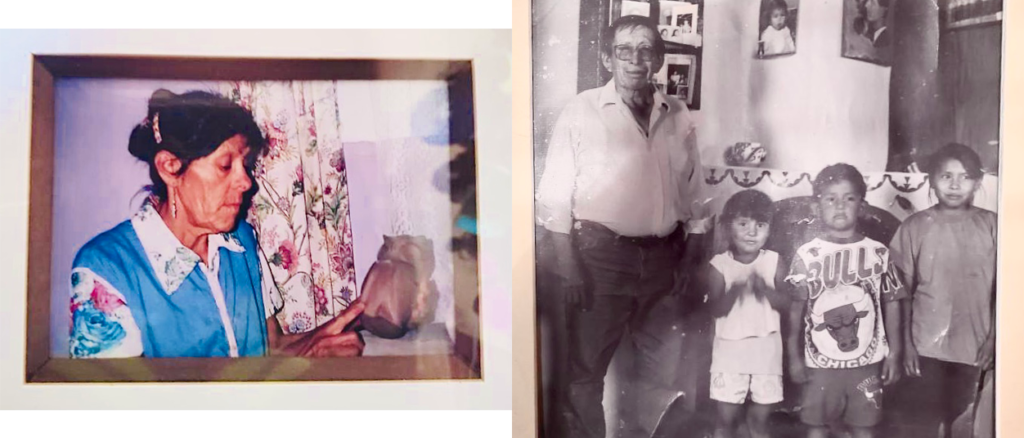
I started grad school in the spring of 2019, and my first semester was smooth sailing. Oh boy, after semester one, the rest of my time at grad school was intense, to the point of wanting to surrender. I constantly questioned myself, what did I get myself into? Can I do this? Is this worth it? Being a single mom, working a full-time job, enrolled in a graduate program and becoming a teacher during the pandemic had its own challenges, and of course coming from a traditional family and being a Pueblo woman is also no easy role. Knowing my identity as an individual and the core values my late grandparents, Joe and Florinda Gachupin, instilled in my family kept me grounded. I persevered and stayed resilient because at one point, my ancestors prayed and fought for me to be where I am today and who I am today. My Indigenous ways of knowing allowed me to be resilient through all the challenges, fears and doubts I faced. Each day I am thankful for my family, especially my mother, because of her positive nurturing, she instilled the tools I needed for this life I am living. My father also had his own ways of instilling the tools I needed to be where I am at today.
Why am I telling you my story? My hope is that it inspires you to do more, and be more because we are all capable. I took the path of more resistance because I knew it was daunting, I knew it would challenge me, but I didn’t know life would throw other curve balls amid grad school. I have learned over the years that life is never static, and sometimes the universe has a way of sending you messages, especially when life may be stagnant for us.

I will continue with some advice, my top key takeaways from my own personal experiences, if you’re considering going back to school, it doesn’t matter who you are, I just hope my advice helps one person in this world. Before you read on and take my advice, step back and examine your own life because we are all living a different timeline, and keep in mind, there is no “right way” to live your life.

  1. Find your support

It’s no denying that you will have a lot on your plate as you take on the next chapter of your life. Too often, as humans, we tend to think that in order to accomplish something is taking it all upon yourself. I think majority of the load of grad school, I took on myself, but I had a support system. I needed a support system, my parents and siblings supported my daughter and I through this accomplishment. Especially if it was crunch time for assignment deadlines and exams. Find a true support system, one that will work with you and not against you.

  1. Sacrifice

You will need to make some sacrifices while on the path to earning and attaining your educational goals. The sacrifice may sound monumental, but no matter what, whatever path you choose for yourself the time will still pass you by. I always did my best to change my perspective to be more positive. Having a positive outlook creates less resistance in what you need to do to attain your goals. Don’t lose sight of why you started on the path and forget about the guilt because there will be many moments you will need to choose your reading, homework and class over your family time. The positive to sacrificing is that it is only temporary, but the reward is so much greater, and I will get to that.

  1. Failure

There will be moments where you will feel like a failure, whether that is with your homework, being a parent, colleague, or simply being human. Without failure, we wouldn’t be able to learn and grow from anything, and if you want to succeed you will have to fail at something. It’s all about how you handle your failures and how you persevere. As humans, we tend to overlook and overthink, so be gentle to yourself as you maneuver through your path of more resistance.

  1. Make personal wellness a priority

When you’re juggling school, work, being a parent, and all other roles or titles you may hold, it is important to continue to make yourself a priority. There will be nights you will need to choose sleep over homework or reading. Days where you will choose self-care, and I suggest you schedule in self-care in your planner, but of course when feasible, just don’t forget that you matter too. Those small ounces of self-care will take you a long way because you will be overwhelmed, stressed and overworked. If you’re not caring for yourself on your journey, how do you expect to reach your destination?

  1. Hard work pays off

Throughout the journey, keep your eye on the prize. Don’t lose sight of why you started and let those reasons be what keeps you grounded. The journey to earning your degree may seem extensive but when you achieve your goal all the work and sacrifice will be worth the accomplishment. Today, I am able to look back to the many times I wanted to give up and put my goals and dreams on the back burner, but I am proud of my resilience. If you give up, make some room to learn and grow from that, but remember, you can always start where you left off.

As a parent going back to school, there are many positive outlooks for your children as well. Pursuing your own educational endeavors will also set up your own children for success because you’ll be serving as the guide for their own education. We know that children are like sponges, what they see, hear and learn stays with them. Lastly, think of going back to school as an investment to yourself and to your family. Investing in yourself will more than likely be money well spent. I invested in myself, and not until the end of my path of more resistance did I see the bigger picture. All the stuggles, hardships, challenges, and wanting to lay next to my daughter and fall asleep with her, was all worth the sacrifice and the rewards are monumentally astounding. I share my story with you because it is inherent in us as Indigenous peoples to tell and share your stories, in hopes that it will teach those around you that we are all capable to do what we set our minds to. I challenge you to invest in yourself, to get outside your comfort zone, because only then will you grow and become the best version of yourself.


Public health services. World Health Organization. (2021). Retrieved 2 April 2021, from https://www.euro.who.int/en/health-topics/Health-systems/public-health-services.
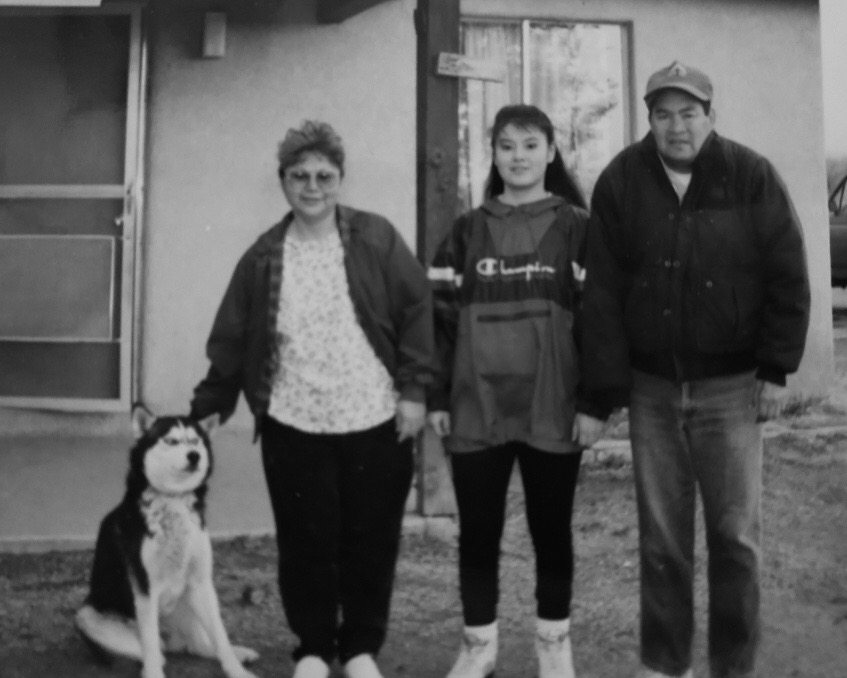


“A woman who is an inspiration to me is Debra Haaland because she is making strides for Indian Country. We need more positive Indigenous representation in this world and I believe Deb to be the person to elevate our voices. She will soon hold one of the highest positions in the U.S. government and I couldn’t be more elated for this historic moment. Lastly, I have to give respect to my mom because I would not have accomplished much without her support and love.” – Ryan Arkie, Evaluation and Research assistant

“My mother is my inspiration because she has shown me the qualities of a true and honest Matriarch.  She is strong, resilient, and courageous in her own unique ways.  She is the one that keeps our family in cohesion even when challenges arise.  She has paved a positive path for all her children and grandchildren.” – Alva Gachupin, evaluation and research coordinator

“Lynn Trujillo is an inspiration to me. Seeing someone from my community rise to where she is, has helped me believe in myself. She is an example of how with the right amount of zeal, Indigenous women can do anything.” – Jennie Holmes, NB3FIT program coordinator

“Her wisdom is knowledge. Her love is comfort. Her cooking is happiness. Her education is motivating. Her commitment is fulfilling. Her presence is a blessing. She is our matriarch. My mother, my first best friend, my biggest supporter, she will always be my inspiration. “ – Jessica Tsosie, advancement assistant

“I draw inspiration from the scientist and author Robin Wall Kimmerer. Through her teaching and writing, the reciprocal relationship she has articulated between humanity, the land, and its plants and animals influences my daily actions and explorations.” – Jon Driskell, COO

“A woman who inspires me is a past NB3 Foundation staff member, Michelle Gutiérrez. She’s a hard working mother who is smart, fierce and kind all at the same time. She is a go-getter who always advocates for her community and the communities she serves. I aspire to be as selfless and genuine as she.” – Sacha Smith, communications specialist


Putting yourself at the top of your list.

One thing I’ve learned since becoming a mother, it is ok if you feel you can’t “do it all”. This has not been an easy lesson to learn much less an easy thing to admit. I am self admittedly often too proud. And I am an especially proud Native woman – a Pueblo woman. So, realizing and accepting this not only didn’t come easy but even felt counter intuitive. And along with that the ideas of self-preservation or self-care also were foreign concepts to me as well. Something out of the books of Shangri-La. But I have accepted and agreed to taking my journey with these intentions.

If any of you are anything like me, you know all too well there are some days when you feel like the family super hero, Super Matriarch! flying through her list of not only the “to-dos” but also the “take care of everyone else’s” and the “keeper of all things”. Knocking all those out in a single-bound. BOOM! KAPOW! Then there are those days when the simplest of tasks that should be a pebble instead feels like a giant boulder you struggle to push up the mountain side. And that “to-do” list rolls out like an old cartoon scroll unraveling off into the never-ending distance. And all you can do is stand and watch it all seemingly get away from you. But it is ok. I repeat, it is ok. Just breathe.

Which leads me to yet another lesson, there is no finish line. Who knew, right? Now it is important to understand that I am a runner. Ever since I was a young girl trying to not only keep up with but also try to beat my superhero, my dad, at his own race. It has just always been a part of who I am. Competitive by nature. So, this concept of no finish line quite simply goes against my ingrained instincts. But I have learned it to be true. We are in a constant state of learning, we are in a constant state of being, and we are in a constant state of doing. Therefore, I have realized the finish line is really all just an illusion. Like an oasis that dissipates the moment you feel you’ve arrived only to realize that the line has somehow seemingly moved. And once again, you are off to the races chasing down this hazy yet magical mirage. But it is ok. I repeat it is ok. Just breathe.

Does any of this sound familiar? All too familiar? Just like so many other working mothers out there the feeling of being overwhelmed is nothing new. But what takes courage is to recognize and acknowledge that you simply can’t do it all no matter how much you deplete yourself trying. There are so many expectations placed upon us as Indigenous, working, modern – but stay traditional – women. I have also had to learn to admit that the biggest expectations usually come from myself. Because for any Native woman who grew up like me, honored but humbly raised in our traditional ways, we carry-on extra responsibilities. We carry-on the teachings of our elders, our grandmother’s, our mother, our Auntie’s, the women of our communities. We carry those responsibilities not just on our backs but quite literally in our bellies. All the knowledge passed down to us that we must now show and teach to our children – to our daughters. And for many of us who choose to fulfill those responsibilities it is not always easy.

It is not always easy navigating the many roads, avenues, and corners of the world that some of us travel to access education, to gain our experiences, or even seek adventure before taking on the responsibility of a career, being a partner to someone, and motherhood. And sometimes navigating those roads and paths back home can be just as tricky, sometimes even more treacherous than the ones taken when you first left. For me, personally, no matter how far I ventured or traveled or even lived away from my village, I was never too far away. My grandfather would always tell me assuredly “you will always come back home”. He was right. My heart always brought me back home. And home is where I stay to raise my daughter.

As much as we try to balance our everyday lives the one constant that grounds us as mothers is our children. As it should be. And as my daughter grows, I too continue to grow with her. I see many things in her – my mother, my father, my grandparents – all who are no longer with us in this physical world but who show themselves through her. Her laugh, her expressions, how she stands with her arms folded just like my dad did and her soft, compassionate, caring nature just as my mother. She is my new breath and yet at the young age of seven also my guide to my past. We, Pueblo people, often say the children came from knowing and she teaches me that every day.
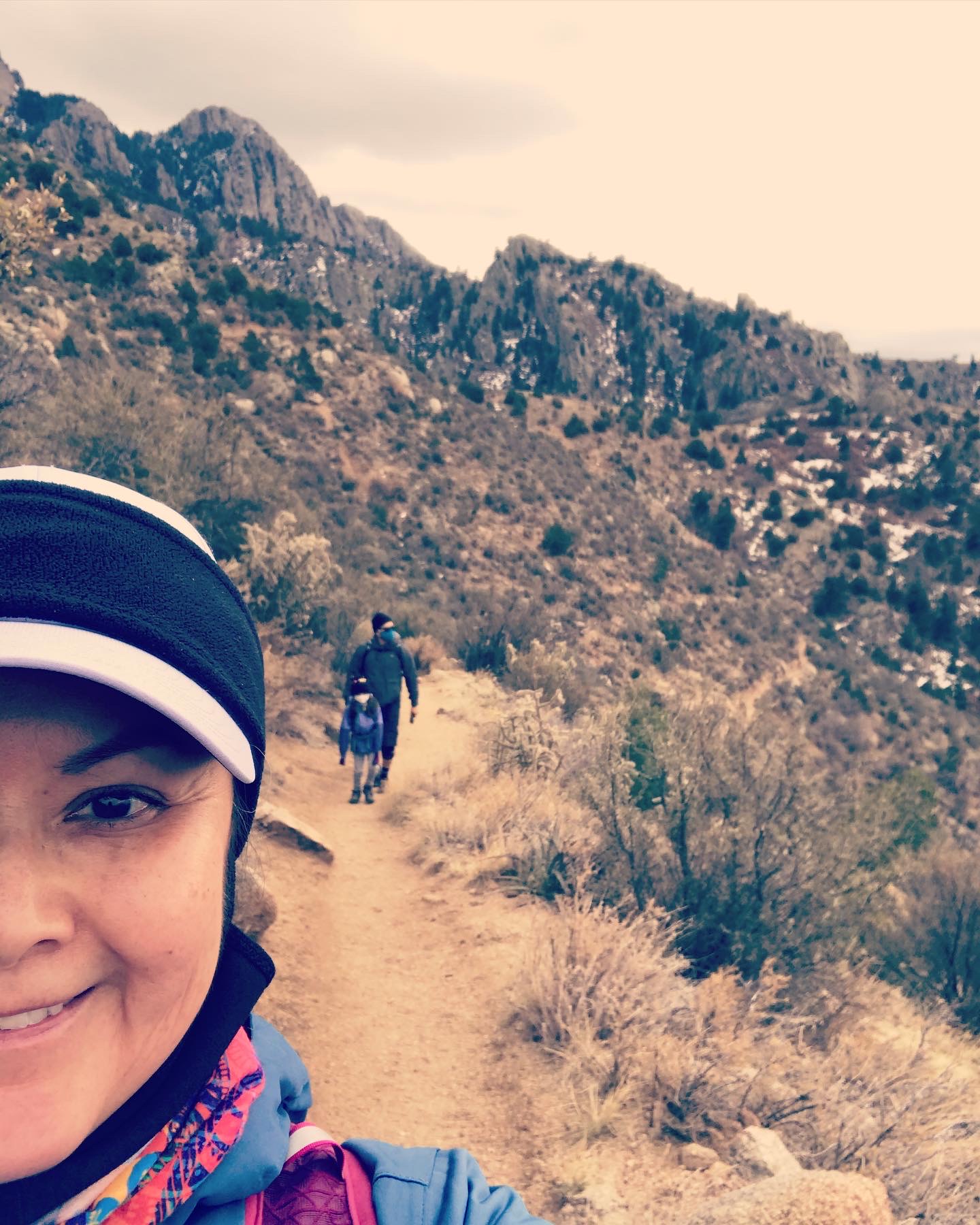
So how do I honor her and raise her to be a strong, confident, Indigenous woman in this unforgiving atmosphere? I ponder this question almost every day. Obviously knowing all the challenges she will face. Surely, I don’t have all the answers but what I can give her is the same love and teachings I was given by my family and my community. There are many ways to do that but the most important for us both is learning and re-learning our Keres language together and utilizing our language in the things we do. We cook together just as I did with my mother and all the women in my family, acknowledging in Keres the traditional foods and plants we eat and how they were grown.

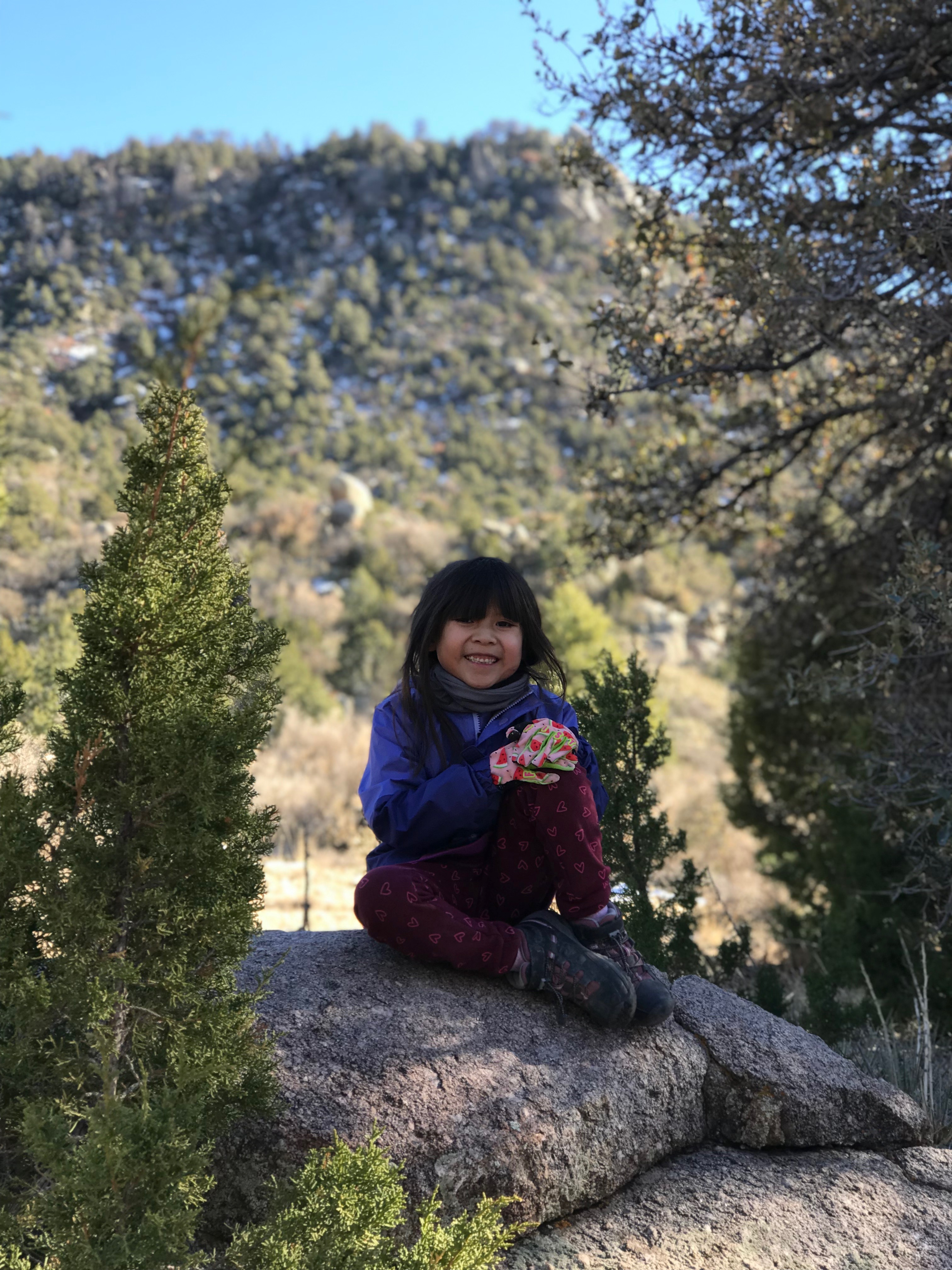
We also go on family hikes, bike rides, or fun runs which brings us much needed time together to actively enjoy our space in this world. Being outdoors in nature is where I find my place to ground myself, reconnect with our homelands, and just be. And, as parents, we realize the positive influence these places and activities also have on our daughter. When I asked her “what is the number one thing you want to do for your birthday?”, her response “go for a hike!”. So, hike we did. Almost five miles round trip into the mountains. “Challenge accepted!” as she confidently exclaims. And on this hike, I again speak to her the best I can in our language to remind us of the significance of all that we see, the name of the area we are occupying, and what it means to us as Pueblo people through our old stories, our history, our creation stories. We acknowledge the names of plants, trees, and animals. These is how I honor her and in doing so honor myself, and those before us. Remembering them and expressing our gratitude. Doing all these things is how I practice self-care and self-preservation. This is how I choose to prioritize myself. When I need my own space, I run. Just as I learned as a kid from my father, remaining grateful that I still run.
To all the single, married, or “it’s complicated” women and mothers out there remembering to replenish your spirit is crucial. To my Indigenous sisters, I implore you to prioritize yourself by recognizing the beauty around you, taking your place in this world, and most importantly recognize the beauty within. Follow our teachings by sharing your gifts but also recognize how important it is to give yourself the same love and care you would to others. I see you; I am you; I honor you.


By: Demitritus Payne, NB3FIT Program Coordinator


“How to deal with youth with problematic behavior.”

I’ve always had a strong dislike of this statement. Why? Because this statement vilifies our youth and it makes it look like their disruptive behaviors were done on purpose, for the fun of it, when in reality their actions could’ve been caused by a multitude of things. Things they may tell us about, and things they may never tell us about. This mindset of “dealing with problematic youth” is the problem. As coaches/teachers/educators or any person who works with youth, or has youth of their own, we should not be “dealing” with our youth, but instead “working” with them.

Now the real question “how can we work with the youth to help them?”

It is my firm belief that in order for us to help our youth we must change our mindsets from that of “dealing” with them to “working” with them. This mindset must be changed because by “dealing” with them we are not helping them, which means we may be resorting to scolding them. Do they learn anything from the scolding? Probably not. However, working with them allows for a teaching moment. We can help them recognize what triggers the disruptive behavior and how-to acknowledge and move past it. For example, during programing (virtual or in person) when I notice our youth becoming distracted or see them losing interest in our activity, instead of scolding them or getting upset with I press the “pause” button on our activity so that we can take a short break. During this short break the youth are allowed to talk freely with one another, get up to move around/stretch, and use the restroom. During the break I try not to talk because I want the youth to facilitate their own conversations and connect with their peers. I find that giving them this break to be beneficial to the youth because after they often come back to the activity re-focused and ready to have fun

The thing to remember when helping the youth is that this must be a 50/50 process. Why must it be a 50/50 process? It has to be this way, because if not it is in essence like talking to a brick wall if the youth don’t meet you half way. This process of working together will not happen overnight; it will take time. It takes time because in order for the youth to meet us half way they have to trust us.  A key point to remember, if the youth do not want to meet you half way please DO NOT force them to. No one likes being forced to do anything, so it will only make the process of trying to work with the youth even harder.
LISTEN! In the end everything boils down to this one word. In my opinion, this is the most underused tool we can use to help our youth. By listening to our youth, we can not only earn their trust, but we can also learn about them as individuals. While this may seem like the easiest thing to do, I assure you it isn’t, it is actually the hardest thing to do because it requires us to let go of our point of view (POV) and see things through the POV of our youth. By doing this one thing, we can show the youth that we will not only be here for them, but we will care/support/love/work with them.

My top 3 Coaching resources

About Demitrius:

Here is a little info about myself. My name is Demitrius Payne, I come from the Pueblo of Laguna and here at the foundation I am a NB3FIT program coordinator. I am also the lead coach for our Junior golf program while also assisting with our other programs. I learned about the program as a kid when I joined the NB3FIT summer golf programs; and in high school I asked to do an internship with foundation during one of its fall and spring seasons. After my internship that year I started working for the foundation during the summers and once I graduated high school I started working year round with the foundation and was also a full time student at UNM. I chose to stay with the foundation while I was going to school because I love working with the kids, I enjoy seeing their smiles and their joy for the activities we do I believe our programs are a great stepping stone for our youth to accomplish great things because not only do we teach them about healthy living (I.e. exercise, eating healthy, mental health ) we also teach them about leadership skills that will not only help them in the classroom but in the real world when they venture out into it.

It’s #BlackHistoryMonth and we recognize the importance of honoring the contributions made by Black individuals and communities throughout history. We continue to stand in solidarity with our Black allies, and commit to working together to create better futures for our youth and communities by telling our own stories and uplifting our communities and cultures.

Here are some websites to help you celebrate Black History Month.

Black and Native American history:
African-Native American Lives in America
Black Indians: A Hidden Heritage
An Ancestry of African-Native Americans
The Black Native American descendants fighting for the right to belong

More resources to celebrate the month:

Children’s books to Celebrate Black History Month
Documentaries and films that highlight Black history and culture
Learn about 28 Black history makers in 28 Days
Support Black owned businesses

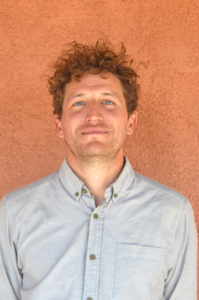
If you look at the “Our Team” page on the NB3 Foundation website, you might wonder why, at a Native-led organization, the first staff photo is a goofy-looking white guy. I’m the goofy-looking white guy (though I have had a haircut since that photo was taken) and I often wonder the same thing. Here’s the short version of who I am and how I ended up working for the NB3 Foundation.

I have never lived on land that my ancestors didn’t murder and swindle to steal. I was born in the traditional territory of the Chickasaw Nation, in present-day Memphis, Tennessee, and I first heard about the Notah Begay III Foundation when I was living on Zenú ancestral lands in present-day Cartagena, Colombia. In between, I grew up blissfully ignorant of my privilege as my parents fostered my love for the earth and commitment to working for justice. After graduating from the University of Memphis I moved to New Mexico to begin my career in education as a special education teacher at Cubero Elementary School.
That’s when I fell in love with the people and culture and land of this incredible place. Although I was already aware of the horrific history of European colonization, it was also when I truly began grappling with what it means to be a settler on Indigenous lands. I was blessed to work with several Indigenous educators who patiently answered my ignorant questions and provided the guidance and, when necessary, criticism that helped me begin to understand my role in working with Indigenous youth, families and communities. I will forever be grateful to these colleagues, my students and their families who welcomed me into their homes and communities for feasts and friendship. 

In the following years, I trained and supported new teachers, led a youth development program, developed the vision for and served as founding principal of a new K-8 public charter school and taught 2nd grade in an international school in Colombia. Everywhere I have worked and visited I have witnessed the effects of the exploitation and subjugation inherent to European colonization and contrasted them with the practices of reciprocity, care and respect I was shown in Acoma and Laguna. My ancestors caused immeasurable harm in their selfish, foolish pursuit of wealth and ease and people who look like me continue to drive the world to its present place of disharmony and peril. All of my experiences and learnings in diverse work settings and communities solidified my belief that, in order to overcome our current ecological, social, political and spiritual crises, it is essential to replace practices of colonization with Indigenous wisdom and traditions sustained over millennia by Native communities.

My generation will not complete this work and the best contribution we can make is to support and protect the youth who will lead renewal and healing for our world. The experiences of my former students established the importance of safeguarding the holistic wellness of Native youth in order for them to develop into the leaders that we all need. I can think of no work more valuable than ensuring Native children achieve their full potential by advancing cultures of Native American community health so I was inspired to learn about the Notah Begay III Foundation and enthusiastically submitted my application for the Chief Operating Officer position in February. 

I was immeasurably stoked in April when I received the call offering me that position and my excitement, motivation and gratitude have only grown over the past months. Being able to contribute to the Foundation’s work providing meaningful programs for youth, developing Indigenous-rooted evaluation and research models, and supporting the collective impact of Native youth-serving organizations has been challenging, instructive and, thanks to our remarkable staff, fun. When Justin resigned, I was honored that the Board of Directors asked me to fill the role of CEO on an interim basis and that is how my goofy picture ended up on the website.

I know that it is not my place to lead this organization and I am eager to support  the Foundation’s next dynamic and innovative leader. I will always grapple with what my role should be in working with Native organizations and communities but, as long as the staff and leadership believe my work has worth, I will listen, learn, enjoy and contribute as much as I possibly can. I am humbled, inspired and grateful to be a part of such a phenomenal group of colleagues and can’t wait to see the progress towards our mission in 2021.  


Like most everything, voting and why someone chooses to vote in unique to that person. Every election has so much at stake, and with the general election less than a month away, we asked our NB3 Foundation staff to share why they will be heading to the polls next month.

Erma Trujillo | Finance Assistant

“I vote because my voice counts, my family counts, my community and my people count.  I may be but one voice but I represent many.  It is an opportunity to make a difference.  It is an opportunity to be heard.  It is an opportunity that wasn’t always granted but now more than ever I believe it is our duty to participate in the process that affects us all.  We may go to the polls as an individual but collectively we can make a significant impact.” 


Alva Gachupin | Evaluation and Research Specialist

“I vote because my vote matters and it affects our youth tomorrow, and my vote matters because my ancestors fought for me to be here today.”


Tom Camacho | Grant Writer

As a grant-writer, I vote for assurance that legislation to guarantee Government funding for Indigenous communities is supported. Government agencies that provide this funding have their budgets allocated through the legislative process; I vote for officials who are dedicated to maintaining that crucial support.” 


Jon Driskell | COO

“Like it or not, elected officials hold huge power over factors that impact our daily lives with lasting repercussions for our children and grandchildren. I vote for justice, for peace, and to protect our land, air, and water from industry and pollution so that they will sustain the generations to come.”


Leroy “Buster” Silva | Community Coordinator

“As an Indigenous person, I have been taught to do things with other people in mind. We represent more than ourselves when we Vote. We Vote for those who didn’t have a voice… We Vote to keep the legacy of our families and people alive… We Vote to make the world a better place.” 


Cyanne Lujan | Director of Advancement

“Our ancestors fought and persevered through many events and we are still here and still demanding that our voices be heard. I will vote because of the sacrifices they made and so that me, my children and future generations will continue be heard, our rights protected and our way of life valued.”


Jessica Tsosie | Advancement Assistant

I vote to be the change in my future. My future is not only mine but my family, my friends, my community and my culture. This is a chance for my voice to be heard.” 


Sacha Smith | Communications Specialist

“ I vote because as a mother I know my vote counts for more than just me. As we make our way to the polls in November I ask you all to vote for “us”. Vote for our Indigenous communities, for our traditions and our way of life. Vote to protect the futures of our young people.”


Request a ballot or find your  nearest polling place here!

The COVID-19 pandemic has once again thrust the health vulnerability of Indian Country into the light.  In less than six months, the Navajo Nation held the top spot of most positive cases per capita in the United States. We witnessed relief fund after relief fund pop-up and millions of dollars pour into the Navajo Nation and beyond. The level of human capital invested in helping our relatives alone was impressive, to say the least.  Indian Country found itself placing tens of millions of dollars into treating and protecting Native people, particularly the “high risk” and most vulnerable. Significant efforts, including curfews, travel bans, mask-wearing and lock-down orders were put in place to “prevent” the spread and growth of this pandemic.


For the most part, these orders and policies are being followed and slowly we are seeing the numbers slow down. We are witnessing entire norm changes in just a few short months. For example, wearing masks everywhere, social distancing, temperature checks at grocery stores, and no handshakes or hugs, to name a few.  It has been extraordinary to experience first-hand what has taken place since March 2020 and to see how quickly people are adapting- be it uncomfortably or begrudgingly.  On July 21st, the Navajo Nation had 8,617 positive cases, 6,369 recoveries and 442 confirmed deaths.  The numbers are better, but the health of the Navajo Nation remains tenuous at best.


Meanwhile, we have to ask- “Why are Native peoples so vulnerable to this pandemic?” Of course, there are many factors that contribute to this answer. One contributor, unfortunately, continues to be UNHEALTHY LIFESTYLE CHOICES. The fact remains, a significant portion of the vulnerable and high-risk individuals in Indian Country are saddled with PREVENTABLE diseases: obesity, type-2 diabetes, heart disease, cardiovascular diseases, hypertension and even some cancers.  While we can site many factors for why these preventable chronic diseases ravage our communities, one fact remains- lack of healthy opportunities and choices leading to unhealthy behaviors and lifestyle choices.  Current lifestyle choices, such as poor diet, lack of physical activity, smoking, overuse of alcohol, and inadequate relief of chronic stresses are key contributors in the development and progression of preventable chronic diseases. The result is a high number of Native people now labeled “high-risk,” who are extremely vulnerable to Covid-19 and who lack the full capabilities to fight of this virus and others.


If there is a silver lining in this pandemic, it has revealed that we can make major shifts, decisions and investments to protect and help our relatives when we want to and when the will is there. How do we harness this current “will” and move ourselves further into full health prevention norms and practices?  How do we normalize healthy behaviors? How do we support and invest in systemic approaches to healthy norms and lifestyles, including food, physical activity and mental and emotional respite?  How do we invest in our children at a level we have invested into COVID-19?  How do we create the same level of urgency for the wellbeing of our children and families as we did for the most vulnerable during COVID-19? How do we embrace the full concept of prevention and lead from a place of strength, knowledge and inspiration?


If there ever was a time to rethink, redirect and commit our resources, energy and knowledge to creating a sustainable and healthy future—now is the time.

When the pandemic hit in March none of us quite knew the extent of the situation. We quickly went from the expectation of having to work from home for one week while it blew over to working at home for months with no end in sight. As so many of us have shifted our lives and work to cope with the effects of the pandemic, we knew that at the NB3 Foundation we needed to support one another any way that we could. Afterall, we are a #NB3FAM.

That’s when our Wellness Committee stepped in to help support the health and well-being of our staff.

After a few brainstorming sessions, we knew we wanted to bring our team together via video chat as often as we could. Even though it was over the computer screen, we knew it would be better than no interaction. After all, we are a fairly  small organization – about 15 full-time staff- so we are very close knit and are used to interacting with everyone on a daily basis.

So, we decided to host Wellness check-ins, three times a week!

The check-ins were in the mornings and were a way we could help one another get a positive start to our day. Each day would consist of an activity focused around our mental, physical or nutritional health. Some days were self-care days and focused gratitude journaling, mediation, goal setting or a quick morning yoga session. It was awesome to get a glimpse into each other’s quarantine life. It’s true, we really are all in this together, and being able to connect with one another three times a week and NOT focus on work, was therapy on its own.

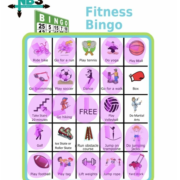
So now, as the world starts to slowly reopen, our team is currently on a hybrid-schedule. We all work two days in the office and three days at home. Our wellness check-ins have since been transformed into monthly check-ins. In June we had a BINGO fitness challenge, and we just finished our July Mileage challenge. As a team we clocked over 950 miles on foot and bike!

As we continue to make health and wellness a priority for our team, we challenge you to do the same! It doesn’t take an official “committee” to reach out to your fellow team member to check in on how their doing, or to schedule a quick zoom sip and chat with your staff. You don’t even have to meet up via video chat, just send a quick calendar invite to all staff for the same time each day as a reminder for them to take 15 mins to focus on themselves.

Together we will come out of this stronger.


Native Breastfeeding week is August 9-15! Here at the NB3 Foundation we believe it is important to introduce healthy eating and drinking to our children at birth, INCLUDING breastfeeding! We’d like to take this opportunity to share the amazing work community partners are doing to make lasting policy, systems and environmental changes in their community to promote and support breastfeeding.

Tamaya Wellness Center

Tamaya Wellness Center is proud to welcome nursing mothers to use their available Lactation Station. “A mother’s milk is a baby’s first source of nutrients and breastfeeding creates a life-long nurturing connection between mother and child.” We are honored to be a funding partner to this great organization. Read the full blog here: https://nb3foundation.org/2019/11/07/tamaya-wellness-center-recognized-national-breastfeeding-month-with-opening-of-new-lactation-station/


Five Sandoval Indian Pueblos, Inc.

Watch how community partner Five Sandoval Indian Pueblos, Inc. WIC program implemented a breastfeeding policy and how they’re supporting breastfeeding in their communities!


More inspiring Native Breastfeeding Week highlights and resources!