

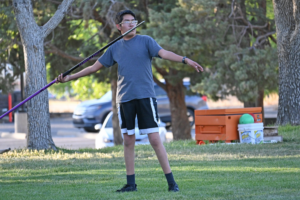
NB3FIT Track & Field athlete Lorenzo Leon, 14, of the Pueblo of Acoma, is finding success both on the track and in the classroom, where his curiosity sparked an interest in beekeeping. While competing this season in the 800-meter run, 1,500-meter run, javelin and long jump, Lorenzo also completed a beekeeping project for his eighth-grade class at the Native American Community Academy (NACA).
Lorenzo’s interest in bees began when his grandmother started taking a beekeeping class and prepared to bring bees home. He and his grandfather helped build a protective enclosure for the hive, and Lorenzo soon had the opportunity to learn more through visits to the Pueblo of Laguna apiary, which is home to more than 10 hives.
Through his research, Lorenzo learned about the important roles queen bees, worker bees and drones play within a hive. He also participated in hive inspections, helping examine frames for honey, pollen and developing bees while learning how colonies work together to thrive.
As part of his project, Lorenzo interviewed local beekeepers and discovered the important role bees play in pollinating crops and supporting healthy ecosystems. He also learned lessons that extend beyond the hive, including teamwork, patience and cooperation.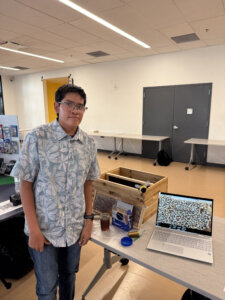
“We can learn from the bees by watching them work together to keep the hive alive and growing,” Lorenzo shared in his project.
NB3 Foundation is proud to celebrate youth like Lorenzo who pursue their interests beyond sports, embrace learning opportunities and strengthen their connections to community.
To learn more about New Mexico honey bees, visit the New Mexico State University bee program website.
Read Lorenzo’s full report below!
Learning about Beekeeping
by Lorenzo Leon
I got interested in bees because my grandma was taking a class in beekeeping. She was getting ready to bring bees home, so my grandpa and I helped make her a “bee corral.” We did this because the range horses roam around where we live, and the wind blows hard sometimes. Later, I had the chance to go to the Pueblo of Laguna apiary, where they now have more than 10 hives.
A beehive has bees that perform different jobs.
The queen bee is the most important bee in the hive. Her job is to keep the bees together and lay eggs throughout her life.
Worker bees make up most of the bees in the hive. They are all females and have many jobs, including:
- Keeping the hive clean
- Maintaining the hive’s temperature
- Taking care of the queen
- Caring for eggs and larvae
- Guarding the hive
- Collecting nectar and pollen
During the summer, worker bees are very busy and may live about six weeks. During cooler weather, they are less busy and can live about six months.
Drones are the male bees. There are usually fewer of them. Their job is to mate with a queen bee, usually one from another hive. I learned that worker bees can push drones out of the hive because they do not help with anything else in the hive.
I learned how to help with hive inspections. We wear protective veils and suits over our faces and bodies, but I have still gotten a few bee stings. When the hive is opened, a smoker with cool smoke helps move the bees around.
We have a Langstroth hive with 10 frames. We take out each frame to see what is going on in the hive. We look to see how much nectar and pollen are stored. We look for new bees. Eggs are hard to see, so we look for larvae and new adults forming in covered honeycomb cells. We also look for the queen. She is bigger and longer than the worker bees. Sometimes she is hard to find, and it is exciting when we see her.
I interviewed two Laguna beekeepers for my project, and here are some important things to remember and think about.
Bees are important to agriculture because they help pollinate crops.
We can learn from bees by watching them work together to keep the hive alive and growing. We learn that we need to work slowly and calmly when working with bees and pay attention to what we are doing. We benefit from the gifts of bees, including honey and wax. We also need to be aware that using chemicals, such as pesticides, on plants is harmful and often deadly to bees.
I am glad I am learning about bees and have the opportunity to work with them.